The Paradigm Shift: Mapping AI’s Impact on the Human Experience
It has been over three years since the mainstream breakout of ChatGPT. As AI evolves from autocomplete to deeply integrated pair programmers, what happens to human skill?
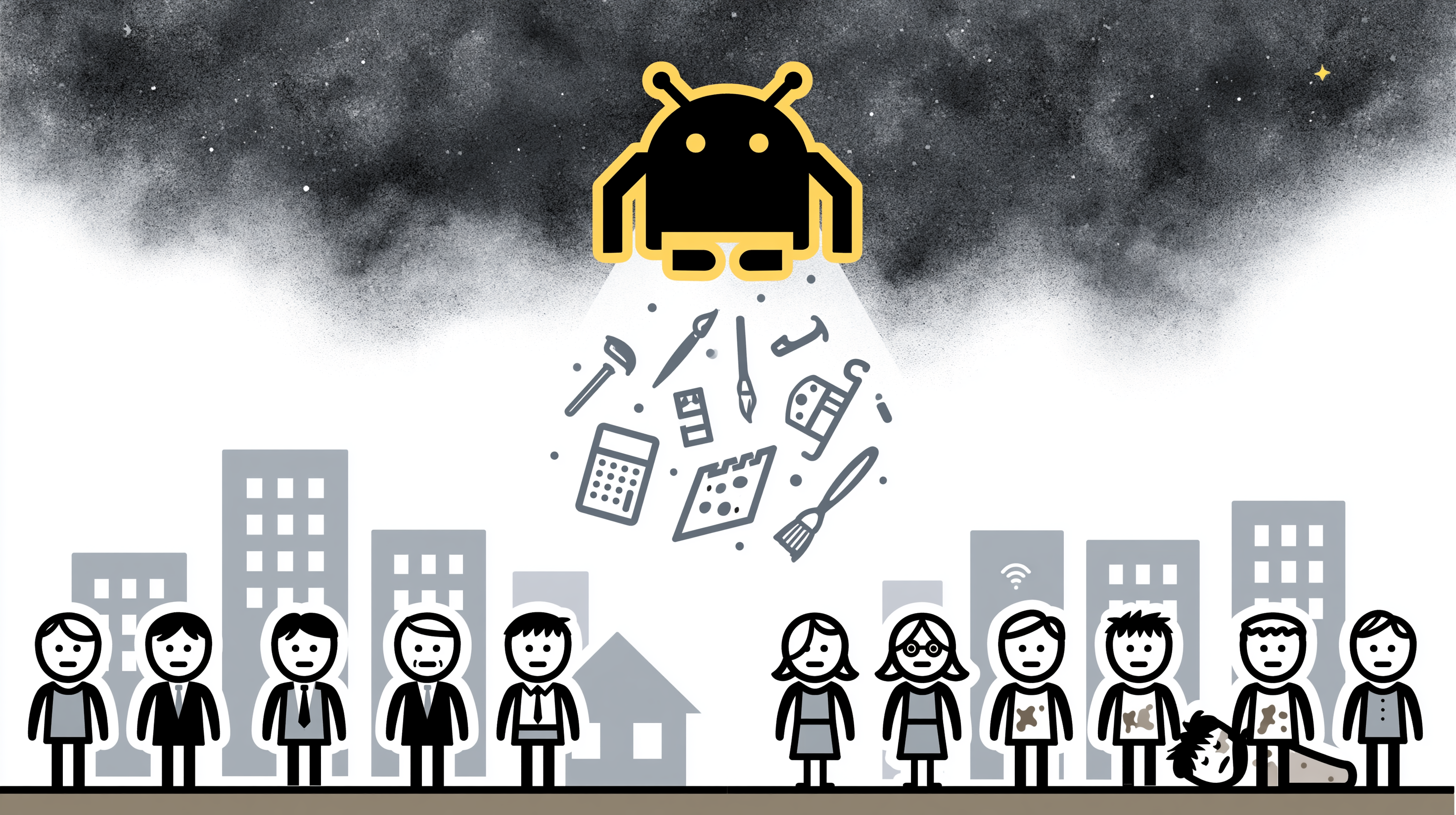
It has been over three years since the mainstream breakout of ChatGPT in early 2023, and the trajectory of artificial intelligence has been nothing short of exponential.
When I first integrated AI into my workflow in mid-2023, I was highly skeptical of its long-term utility. At the time, LLMs (Large Language Models) felt like stochastic parrots—highly articulate, capable of processing broad general knowledge, but fundamentally superficial. Interacting with AI felt like consulting a generalist who knew a little bit about everything, but whose outputs were too generic to solve nuanced, production-level problems.
However, the technology rapidly evolved, particularly within software engineering. We witnessed the rise of Agentic AI—systems capable of autonomous execution, tool use, and dynamically gathering project-specific metadata. These agents began delivering far more context-aware solutions. Yet, early iterations remained constrained by rigid context windows and high latency, limiting their ability to reason over massive, real-world codebases.
The true turning point arrived in late 2025. Tools like Cursor revolutionized the developer experience. As context windows expanded into millions of tokens, paired with advanced prompt engineering, custom system instructions, and the adoption of the Model Context Protocol (MCP) to seamlessly bridge data sources, AI shifted from a simple autocomplete utility to a deeply integrated pair programmer.
Now in 2026, we are witnessing a massive leap in reasoning capabilities with frontier models like Gemini 3.5 and Claude 5 Sonnet. The game has entirely changed. I now have the confidence to offload repetitive, deterministic "dirty work" to AI, and it delivers impressive, highly optimized results roughly 95% of the time—occasionally outperforming human baselines.
The Standardization of Skill
Looking ahead, this shifts the conversation toward how AI will reshape human society—affecting students, professionals, and parents alike. AI has matured into an incredibly reliable infrastructure that rarely suffers from critical failures.
Historically, humanity has always been defined by tool utilization; our capacity to build and master tools is what differentiates us. But every time a disruptive technology emerges, skills that once required thousands of hours of rigorous training become democratized and normalized.
Consider the invention of the electronic calculator. Prior to its ubiquity, the ability to calculate complex arithmetic quickly and accurately was a highly valued, specialized human skill. The calculator commoditized that skill instantly. Suddenly, computational speed lost its premium because anyone with a device could achieve the exact same throughput and accuracy.
We are seeing the same democratization occur across creative and technical domains today. For instance, as a developer, I traditionally struggled with graphic design, UI assets, and branding elements. Today, generative AI allows someone with zero formal design training to synthesize high-quality visual assets instantly. The barrier to entry for cross-disciplinary creation has effectively dropped to zero.
The Danger of Cognitive Offloading: The "Empty Shell" Dilemma
Despite this democratization, a critical philosophical risk remains: humanity must still master the fundamentals.
Even if a modern calculator can compute a complex definite integral instantly, understanding the underlying principles of calculus is still essential to interpreting the result. The same rule applies to software engineering. If you leverage AI to resolve a bug or architect a system without understanding the underlying computer science principles, you become an empty shell—completely dependent on the machine.
The real threat lies in what I call being "lazy in the wrong way"—using AI exclusively for the end result while bypassing the friction of learning. AI can grant a user superficial "superhuman" capabilities in the short term. But without intellectual rigor, that individual becomes entirely incapacitated the moment they are disconnected from the network.
Furthermore, this over-reliance poses severe risks to human development:
- Developmental Stagnation: Students who outsource their critical thinking to LLMs risk disrupting their own cognitive growth, failing to build the neural pathways required for complex problem-solving.
- Social Decoupling: In real-world environments where direct, synchronous human communication is mandatory, an over-reliance on AI-generated scripts leaves individuals poorly equipped to navigate natural social dynamics.
Final Thoughts: Process Over Output
My encouragement to readers is clear: Master AI as an extension of your toolkit, but fiercely protect your understanding of the fundamentals.
Remaining a valuable, impactful human in an AI-driven world requires the traits machines cannot replicate: a resilient mindset, acute situational awareness, empathy, and emotional intelligence. These attributes cannot be generated by a prompt; they can only be forged through the friction of the learning process.
Leverage the power of the tool, but never outsource your mind. Be a smart human.